Post | September 2021 | 3 min read
FREE Just Peace Walking Tours on Sunday, September 19

Humanity Hub in partnership with Volunteer The Hague is organizing four different walking tours in different parts of the city.
Each tour will focus on a different grouping of organizations. A volunteer from each organization will be available to give a personal story and explain about their workplace at a pre-arranged time.
FREE Just Peace Walking Tours on Sunday, September 19 starting at 10:00, 11:30, 13:00 and will last approximately 1 hour.
There will be four different tours that the participants can join, all four of them following a different route and tackling different peace and justice themes:
1) The EURO tour A begins at the Churchillplein, and participants who choose to join it will firstly visit and learn about Europol, the EU’s law enforcement agency. From then, they will have the chance to meet representatives from the Hague Conference on International Law. Eurojust is the next destination, where participants will learn more about how the EU coordinates in order to tackle the most serious of cross-border crimes. The last sightseeing point is the Organisation for the Prohibition of Chemical Weapons*, which is located on Johan de Witlaan.
1) The EURO tour B begins at the Organisation for the Prohibition of Chemical Weapons*, which is located on Johan de Wittlaan. Eurojust is the next destination, where participants will learn more about how the EU coordinates in order to tackle the most serious of cross-border crimes. From then, they will move to the Churchillplein and have the chance to meet representatives from the Hague Conference on International Law. And finally, participants will visit and learn about Europol, the EU’s law enforcement agency.
*For this tour, it is important that you have a photo ID with you during the tour and you might have to undergo a security check. This is because the OPCW intends to let the group within their perimeter (i.e. inside the fence) even though you will not enter the building itself.
2) The CENTRAL tour C starts at Prinsegracht, with a visit to the Organization for Security and Co-operation in Europe, the largest security-oriented organization in the world. After that, participants will get to visit Europe House, the home of the Netherlands’ PermRep to the EU, and the Representation of the European Commission. Then, participants will get to meet the Hague Humanity Hub’s representatives, and visit the central location of the hub, at Fluwelen Burgwal.
2) The CENTRAL tour D starts at Fluwelen Burgwal, the Hague Humanity Hub’s central location of the hub where they will get to meet the Hague Humanity Hub’s representatives. After that, participants will get to visit Europe House, the home of the Netherlands’ PermRep to the EU, and the Representation of the European Commission. Then in Prinsegracht, it ends with a visit to the Organization for Security and Co-operation in Europe, the largest security-oriented organization in the world.
3) The CARNEGIE tour E will commence at the Hague Humanity Hub in Alexanderveld where they will meet the Hague Humanity Hub's representatives, and then the tour guide and participants will arrive at one of the most famous institutions in the Hague – the Peace Palace*.
* For this tour, it is important that you have a photo ID with you during the tour and your name will be registered beforehand. This is because the Peace Palace will allow the group to enter the premises.
3) The CARNEGIE tour F will commence at one of the most famous institutions in the Hague – the Peace Palace*. Then, the tour guide and participants will visit the Hague Humanity Hub in Alexanderveld where they will meet the Hague Humanity Hub's representatives.
* For this tour, it is important that you have a photo ID with you during the tour and your name will be registered beforehand. This is because the Peace Palace will allow the group to enter the premises.
4) The “Crime and Punishment” tour G will start at the International Criminal Court, where participants will meet and discuss with one of the employees of the court. From there, they will pay a visit to the Oranjehotel, the former Scheveningen prison used during the Nazi occupation of the Netherlands, now a symbol of history and remembrance for the next generations*.
*We encourage you to visit the Oranjehotel after the tour has ended. You can reserve your tickets via https://www.oranjehotel.org/.
4) The “Crime and Punishment” tour H will start at the Oranjehotel, the former Scheveningen prison used during the Nazi occupation of the Netherlands, now a symbol of history and remembrance for the next generations. From there, they will pay a visit to the International Criminal Court, where participants will meet and discuss with one of the employees of the court.
Each tour will take place on Sunday, September 19 starting at 10:00, 11:30, 13:00 and will last approximately 1 hour.

Related Posts


Connecting Cultures Event | 14 March 2024

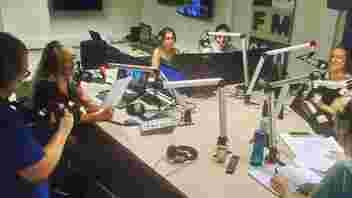
Interview with Tetyana Benzeroual on Dutchbuzz, Den Haag FM 92.0
![On 5 June 2023, Volunteer The Hague Project Manager Tetyana Benzeroual sat down with Professor Lucas Meijs for a wide-ranging interview on volunteer culture in the Netherlands, how internationals living here can make the most of their time volunteering, and the interesting concept of "hyphen volunteering." The transcript of that conversation can be found below. Lucas Meijs is a professor of “Strategic Philanthropy” at the Rotterdam School of Management (RSM), Erasmus University. His current research focuses on issues related to strategic philanthropy, volunteer/non-profit management, corporate community involvement, voluntary energy as a natural resource, and involved learning (life-long development by volunteering). Professor Meijs has been an appointed member of the Raad voor Maatschappelijke Ontwikkeling, the official policy advisory body for the Dutch government and parliament. He regularly publishes on management issues in the philanthropic sector, as well as on volunteer work. He served two terms as the first non-American co-editor in chief of Nonprofit and Voluntary Action Quarterly, the academic journal of the Association for Research on Nonprofit Organizations and Voluntary Action (ARNOVA). Tetyana Benzeroual: What are the benefits of volunteering for internationals in The Netherlands? Lucas Meijs: Volunteering is a very easy way to get connected with new people. We usually think about volunteering as a long term commitment - that you go every week to the same place. But there are many more short term options too! Especially these are very nice if you want to connect to your neighborhood. For example, you could participate in a monthly volunteering activity for a few hours and discover new and interesting places in The Netherlands while meeting new people. I like to tell my students that volunteering brings you places where you usually would not end up going. It might be a place you never thought of going to, like a food bank, but it's good to experience it occasionally and reflect on it. Next time, you could participate in organizing a big barbecue for kids in the neighborhood, which can be a fun and rewarding experience. So it's important to think about creating a "hyphen volunteering," where you gain something from the experience. It's not transactional but rather finding a win-win situation. It could be as simple as enjoying good weather or exploring a new part of the city. It's about looking for ways to make volunteering align with your interests and comfort zone. Sometimes you might push the boundaries a bit, but if you're doing it with friends or even a group of strangers, it becomes more fun. T.B.: Could you please tell us more about what you mean by the term “hyphen volunteering”? L.M.: When it comes to hyphen volunteering, what I mean is that volunteering connects to something in your agenda; in other words, it builds on to the activities and commitments you already have. In the U.S., for example, there are organizations like "Single Volunteers of DC," where people combine dating with volunteering. So, if dating is already part of your regular activities, you can make it an icebreaker by volunteering together. Family volunteering is another option, where you involve your friends or family in the volunteering experience. Think about connecting volunteering to existing plans or interests. [So] instead of seeing volunteering as something added to my already busy agenda, you can ask yourself, "What am I already busy with and how can I connect volunteering to it?" For example, there's a concept called "plogging," where you combine jogging or running with cleaning up your neighborhood. It's about finding ways to integrate volunteering into your already busy agenda. T.B.: We've observed that our audience of international volunteers can be divided into two categories: Those who are already employed and those who are searching for work. How can volunteering benefit these two groups? L.M.: For those who are already employed, volunteering offers an easy way to get out of their working bubble, to step outside of their work environment. It allows them to break free from their routine and engage with a wider community. We have a notable example of a Japanese organization in Rotterdam that was thrilled to support very local philanthropic causes because it gave their employees a chance to connect with people outside their business level. So let's use volunteering to make this a real multilevel international experience. If the working individuals only confine themselves to their own bubble, their international experience becomes superficial in place of a more authentic and meaningful international journey. For those who are unemployed, the role of volunteering differs slightly. Here, volunteering can serve three purposes. Firstly, it offers an opportunity to meet new people who can help with job searching. Try meeting new people, as many as possible. We call this the network function. Engaging in volunteer work that allows you to interact with a diverse network can lead to potential job connections. Secondly, volunteering helps individuals explore various sectors and gain insights into the job market in the Netherlands. By volunteering in different areas such as sports, healthcare, or working with children, they can assess which field aligns best with their interests and skills. We call it the experimental function. The third benefit is skills development. We call it "functional volunteering." Unemployed individuals can use volunteering to sharpen their abilities in a specific area. For instance, if someone has expertise in sports or a related degree, they can search for a weekly volunteering position in a community sports center to demonstrate their capabilities to potential Dutch employers. Combined volunteering offers a "signal function," which shows employers that the prospective employee, engaged with a relevant volunteer role, possesses the necessary skills and commitment. So, the whole combination into the signal function can greatly benefit those seeking employment. Experimenting with different opportunities, understanding what suits them, showcasing their skills through volunteering, and making connections can help them secure suitable employment. It's important to remember that even if a volunteering experience reveals a strong personal dislike for a certain activity, it's still a successful outcome. Being able to determine what doesn't work for you is just as valuable as finding something that does. Ultimately, it's about gaining self-awareness and making progress in your life journey. T.B.: How is volunteering in The Netherlands different from other countries? L.M.: Hmm, I think what is important here is that internationals do not compare volunteering as they know it from their own countries to The Netherlands and instead think of an activity they enjoy greatly. Once they know what makes them happy, then they can try to find this activity in the volunteer environment. There are volunteers driving at primary schools and sports associations, volunteers cleaning up all kinds of places, painting houses, collecting for the food bank, and cooking for vulnerable individuals. Whatever you think is a paid job, you most likely can find someone doing it unpaid as a volunteer in The Netherlands. Of course, correct training is expected as, for example, one cannot drive a car as a volunteer without a driver's license. Neither can this person drive a car for a paid position without proper licensing. In former communist counties, for example, volunteering is perceived by the older generation as forced, whereas the new generation sees it in a similar way as Western people do. If you come from The Netherlands, Belgium, or the Northern states, you see volunteering as active belonging to a community rather than just unpaid labor. They see volunteering as a team effort and an opportunity to build connections within a group. It's not just about doing work; it's about being part of a community. Americans see volunteering more as unpaid work and a slot filling in an assembly line where volunteers are replaced by other volunteers in line. In The Netherlands, we see volunteering much more as a team that builds together a car. But getting into the (Dutch) team is a bit of a struggle. To use an understatement. T.B.: This probably explains why internationals need to interview for volunteer positions, which comes as a surprise to many of them. L.M.: In the States, volunteers will be interviewed to assess if they can do the tasks. The difference with The Netherlands is that the main purpose of the interview is to assess if volunteers fit within the team. In fact, volunteers in The Netherlands are not expected to perform the same task over and over again. They become valuable members of the team who can take up their own projects and steer the course of their volunteer organization. This can make it challenging for internationals to integrate into volunteering activities, as they need to fit into the existing team dynamics. However, once they become part of the team, volunteering in The Netherlands offers flexibility and variety in terms of tasks and activities. T.B.: Any last words of wisdom for our international volunteers? L.M.: For international volunteers seeking positions, it's important to consider that they have the opportunity to become integral members of the organization and something bigger. This aligns well with the desire for learning and belonging that many internationals seek. Volunteering can help them find that sense of belonging within a specific group or organization. It doesn't necessarily require a weekly commitment, as once you become part of the team, there is flexibility in how often you contribute. It can be on a monthly or intermittent basis, depending on the volunteer's availability and preferences. Ultimately, volunteering offers the chance to find your sense of belonging and connect with a community that resonates with your interests and values. It's a valuable opportunity to be part of something meaningful and contribute to a greater collective. T.B.: Thank you for sharing your insights and expertise on volunteering in the Netherlands!](https://ik.imagekit.io/deedmob/o-prod/6897/3073103_1690235569431@1378x776.jpeg?auto=format&w=352&h=198&fit=crop&q=90)
![On 5 June 2023, Volunteer The Hague Project Manager Tetyana Benzeroual sat down with Professor Lucas Meijs for a wide-ranging interview on volunteer culture in the Netherlands, how internationals living here can make the most of their time volunteering, and the interesting concept of "hyphen volunteering." The transcript of that conversation can be found below. Lucas Meijs is a professor of “Strategic Philanthropy” at the Rotterdam School of Management (RSM), Erasmus University. His current research focuses on issues related to strategic philanthropy, volunteer/non-profit management, corporate community involvement, voluntary energy as a natural resource, and involved learning (life-long development by volunteering). Professor Meijs has been an appointed member of the Raad voor Maatschappelijke Ontwikkeling, the official policy advisory body for the Dutch government and parliament. He regularly publishes on management issues in the philanthropic sector, as well as on volunteer work. He served two terms as the first non-American co-editor in chief of Nonprofit and Voluntary Action Quarterly, the academic journal of the Association for Research on Nonprofit Organizations and Voluntary Action (ARNOVA). Tetyana Benzeroual: What are the benefits of volunteering for internationals in The Netherlands? Lucas Meijs: Volunteering is a very easy way to get connected with new people. We usually think about volunteering as a long term commitment - that you go every week to the same place. But there are many more short term options too! Especially these are very nice if you want to connect to your neighborhood. For example, you could participate in a monthly volunteering activity for a few hours and discover new and interesting places in The Netherlands while meeting new people. I like to tell my students that volunteering brings you places where you usually would not end up going. It might be a place you never thought of going to, like a food bank, but it's good to experience it occasionally and reflect on it. Next time, you could participate in organizing a big barbecue for kids in the neighborhood, which can be a fun and rewarding experience. So it's important to think about creating a "hyphen volunteering," where you gain something from the experience. It's not transactional but rather finding a win-win situation. It could be as simple as enjoying good weather or exploring a new part of the city. It's about looking for ways to make volunteering align with your interests and comfort zone. Sometimes you might push the boundaries a bit, but if you're doing it with friends or even a group of strangers, it becomes more fun. T.B.: Could you please tell us more about what you mean by the term “hyphen volunteering”? L.M.: When it comes to hyphen volunteering, what I mean is that volunteering connects to something in your agenda; in other words, it builds on to the activities and commitments you already have. In the U.S., for example, there are organizations like "Single Volunteers of DC," where people combine dating with volunteering. So, if dating is already part of your regular activities, you can make it an icebreaker by volunteering together. Family volunteering is another option, where you involve your friends or family in the volunteering experience. Think about connecting volunteering to existing plans or interests. [So] instead of seeing volunteering as something added to my already busy agenda, you can ask yourself, "What am I already busy with and how can I connect volunteering to it?" For example, there's a concept called "plogging," where you combine jogging or running with cleaning up your neighborhood. It's about finding ways to integrate volunteering into your already busy agenda. T.B.: We've observed that our audience of international volunteers can be divided into two categories: Those who are already employed and those who are searching for work. How can volunteering benefit these two groups? L.M.: For those who are already employed, volunteering offers an easy way to get out of their working bubble, to step outside of their work environment. It allows them to break free from their routine and engage with a wider community. We have a notable example of a Japanese organization in Rotterdam that was thrilled to support very local philanthropic causes because it gave their employees a chance to connect with people outside their business level. So let's use volunteering to make this a real multilevel international experience. If the working individuals only confine themselves to their own bubble, their international experience becomes superficial in place of a more authentic and meaningful international journey. For those who are unemployed, the role of volunteering differs slightly. Here, volunteering can serve three purposes. Firstly, it offers an opportunity to meet new people who can help with job searching. Try meeting new people, as many as possible. We call this the network function. Engaging in volunteer work that allows you to interact with a diverse network can lead to potential job connections. Secondly, volunteering helps individuals explore various sectors and gain insights into the job market in the Netherlands. By volunteering in different areas such as sports, healthcare, or working with children, they can assess which field aligns best with their interests and skills. We call it the experimental function. The third benefit is skills development. We call it "functional volunteering." Unemployed individuals can use volunteering to sharpen their abilities in a specific area. For instance, if someone has expertise in sports or a related degree, they can search for a weekly volunteering position in a community sports center to demonstrate their capabilities to potential Dutch employers. Combined volunteering offers a "signal function," which shows employers that the prospective employee, engaged with a relevant volunteer role, possesses the necessary skills and commitment. So, the whole combination into the signal function can greatly benefit those seeking employment. Experimenting with different opportunities, understanding what suits them, showcasing their skills through volunteering, and making connections can help them secure suitable employment. It's important to remember that even if a volunteering experience reveals a strong personal dislike for a certain activity, it's still a successful outcome. Being able to determine what doesn't work for you is just as valuable as finding something that does. Ultimately, it's about gaining self-awareness and making progress in your life journey. T.B.: How is volunteering in The Netherlands different from other countries? L.M.: Hmm, I think what is important here is that internationals do not compare volunteering as they know it from their own countries to The Netherlands and instead think of an activity they enjoy greatly. Once they know what makes them happy, then they can try to find this activity in the volunteer environment. There are volunteers driving at primary schools and sports associations, volunteers cleaning up all kinds of places, painting houses, collecting for the food bank, and cooking for vulnerable individuals. Whatever you think is a paid job, you most likely can find someone doing it unpaid as a volunteer in The Netherlands. Of course, correct training is expected as, for example, one cannot drive a car as a volunteer without a driver's license. Neither can this person drive a car for a paid position without proper licensing. In former communist counties, for example, volunteering is perceived by the older generation as forced, whereas the new generation sees it in a similar way as Western people do. If you come from The Netherlands, Belgium, or the Northern states, you see volunteering as active belonging to a community rather than just unpaid labor. They see volunteering as a team effort and an opportunity to build connections within a group. It's not just about doing work; it's about being part of a community. Americans see volunteering more as unpaid work and a slot filling in an assembly line where volunteers are replaced by other volunteers in line. In The Netherlands, we see volunteering much more as a team that builds together a car. But getting into the (Dutch) team is a bit of a struggle. To use an understatement. T.B.: This probably explains why internationals need to interview for volunteer positions, which comes as a surprise to many of them. L.M.: In the States, volunteers will be interviewed to assess if they can do the tasks. The difference with The Netherlands is that the main purpose of the interview is to assess if volunteers fit within the team. In fact, volunteers in The Netherlands are not expected to perform the same task over and over again. They become valuable members of the team who can take up their own projects and steer the course of their volunteer organization. This can make it challenging for internationals to integrate into volunteering activities, as they need to fit into the existing team dynamics. However, once they become part of the team, volunteering in The Netherlands offers flexibility and variety in terms of tasks and activities. T.B.: Any last words of wisdom for our international volunteers? L.M.: For international volunteers seeking positions, it's important to consider that they have the opportunity to become integral members of the organization and something bigger. This aligns well with the desire for learning and belonging that many internationals seek. Volunteering can help them find that sense of belonging within a specific group or organization. It doesn't necessarily require a weekly commitment, as once you become part of the team, there is flexibility in how often you contribute. It can be on a monthly or intermittent basis, depending on the volunteer's availability and preferences. Ultimately, volunteering offers the chance to find your sense of belonging and connect with a community that resonates with your interests and values. It's a valuable opportunity to be part of something meaningful and contribute to a greater collective. T.B.: Thank you for sharing your insights and expertise on volunteering in the Netherlands!](https://ik.imagekit.io/deedmob/o-prod/6897/3073103_1690235569431@1378x776.jpeg?auto=format&w=352&h=198&fit=crop&q=10&blur=200)