Skip Navigation
Volunteer The Hague Home
  • Events & Workshops
  • News
  • Volunteer The Hague Talks
Create accountLog in

Contact

  • Riviervismarkt 2, 2513 AM The Hague, Netherlands
  • [email protected]
  • 070 - 302 44 44
Volunteer The Hague

Volunteer The Hague

  • About us
  • Contact us
  • For volunteers
  • For organizations
  • Den Haag Doet
  • Den Haag Doet Academie

Join

  • Opportunities
  • Discover Organisations
  • Create organisation
  • Create account
  • Login
  • Help
  • Policies
  • Privacy Policy
  • Terms

Powered by Deedmob tools

Discover Volunteer Opportunities in The Hague

All the volunteer vacancies on our website are uniquely suitable for non-Dutch speakers

BROWSE ALL VACANCIES

No Dutch? No Problem. Volunteer!

The Volunteer The Hague project connects internationals who are already living in The Netherlands with local non-profit organizations that are based in and around The Hague.

Volunteer in The Hague

Discover Volunteer Vacancies

The vacancies on Volunteer The Hague are uniquely suited for internationals residing in and around The Hague and do not require Dutch fluency. 

DISCOVER ALL VACANCIES
Talent Scan

Talent Scan

You want to volunteer but you're not sure what you want to do? Discover your talents!

Try the talent scan and find out what kind of volunteering suits you best.

DISCOVER YOUR TALENTS
Discover Local Non-profit Organizations

Discover Local Non-profit Organizations

The organizations choosing to list with Volunteer The Hague are enthusiastically searching for a diverse, international pool of volunteers.

DISCOVER ORGANIZATIONS

Find your volunteer opportunity

Click on the field of interest below

Environment
Health
People with disabilities
Poverty & Homelessness
Youth & Education
Animals
Refugees

Latest News

How you can help your local community centre in The Hague by helping prepare or serve meals for vulnerable people

Sharing Food, Building Connections: How Internationals Can Help Community Meals

A simple meal can make a big difference. Across many neighbourhoods in The Hague, community centres organise convivial dinners and lunches where people can enjoy comforting food, friendly conversation, and a sense of belonging. These meals are especially important for senior citizens and other vulnerable residents who may be feeling lonely or isolated. International residents can play a valuable role in making these gatherings a success. One way to get involved is by volunteering as a kitchen assistant. Helping to prepare food, serve meals, set up tables, or tidy up afterwards are all practical ways to support community centres and meet new people at the same time. Another wonderful contribution is sharing food from your own culture. Internationals can help create menus inspired by the cuisines they know and love, while adapting recipes to suit a diverse audience. Lowering spice levels and including halal, vegan, and vegetarian options ensures that everyone feels welcome at the table. Food is a great way to discover different cultures and start conversations between neighbours who might otherwise never meet. Community lunches offer much more than a warm bowl of soup, bread, tea, and coffee. They provide a reason to leave the house, a regular activity to look forward to, and an opportunity to connect with others in the neighbourhood. Friendships are formed, stories are shared, and people feel part of a community. By sharing their time, skills, and culinary traditions, internationals can help create welcoming spaces where everyone feels included. One meal at a time, together, we can build stronger, more connected neighbourhoods, where you, as an active resident, also feel at home.
See more
Kristin Peters is an American in her 50s, who over the course of her life and career has had the privilege of living in 14 countries across the world. Her partner and her relocated to The Hague about five months ago after the global development and humanitarian organization he worked for was abruptly shut down. Alongside her professional life, volunteering has consistently been how she finds her footing in a new place. Wherever she's lived, getting involved in the local community has given her a sense of purpose, connection, and belonging that I think is hard to find any other way. When she arrived in The Hague, she started actively looking for meaningful opportunities, and when she came across the Volunteer The Hague event, it felt like exactly the right first step. It was a chance to meet people, discover what her new city has to offer, and find ways to contribute that feel genuinely worthwhile. She is looking for employment as a social worker in The Hague region.

Volunteer Interview: Kristin Peters

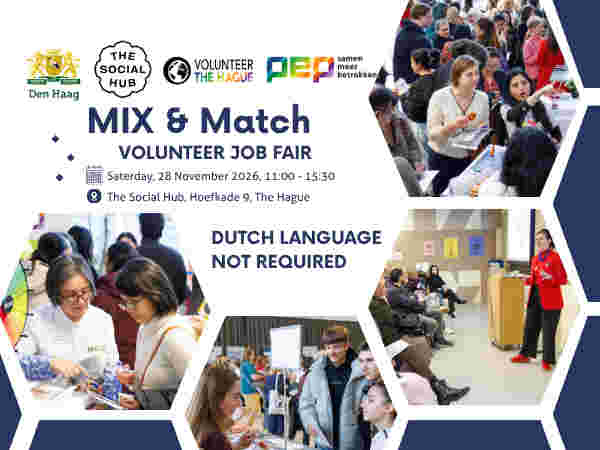
Kristin Peters is an American in her 50s, who over the course of her life and career has had the privilege of living in 14 countries across the world. Her partner and her relocated to The Hague about five months ago after the global development and humanitarian organization he worked for was abruptly shut down. Alongside her professional life, volunteering has consistently been how she finds her footing in a new place. Wherever she's lived, getting involved in the local community has given her a sense of purpose, connection, and belonging that I think is hard to find any other way. When she arrived in The Hague, she started actively looking for meaningful opportunities, and when she came across the Volunteer The Hague event, it felt like exactly the right first step. It was a chance to meet people, discover what her new city has to offer, and find ways to contribute that feel genuinely worthwhile. She is looking for employment as a social worker in The Hague region. Which organisation did you volunteer for? What is their mission? I volunteered for Volunter The Hague itself. They help organizations in The Hague recruit international volunteers who live locally and want to make a difference. What volunteer role did you have and what tasks did you perform? A couple of weeks ago my first volunteer role in the Netherlands was an event greeter at PEP Den Haag's Volunteer Job Fair & Music Festival at Amare. . It was a large event that hosted many local organizations and offered diverse options for volunteering I appreciated the inclusivity, with organizations geared not only towards Dutch speakers, but many opportunities for non-Dutch-speaking volunteers as well. Greeting visitors at the Volunteer The Hague stand was a wonderful experienceI helped with the practical side of things, including setting up and taking down the stands, getting materials out, and answering questions from visitors, all while working alongside two other fun and interesting volunteers. The highlight for me was the time I spent with people who were interested in volunteering but weren't sure where to start. I guided them through an online skills questionnaire that helped match them to organizations that aligned with their passions and skill sets, after which they had the opportunity to visit the tables where organizations had set up more in-depth information about their work and volunteer needs. I genuinely enjoyed those conversations and seeing people get excited when they identified an organization that felt like the right fit. What is typical of your own culture (values, mindset) that you bring to your volunteer role? I grew up in Minnesota, in a family where volunteering wasn't something you did occasionally, it was simply part of how you lived. From elementary school onwards, showing up for your community was as natural as showing up for school. There's something particular to that Midwestern upbringing, a quiet, practical ethic of service, a belief that you roll up your sleeves not because someone is watching, but because it's the right thing to do. That value has traveled with me across every country I have lived in, and shaped every community I have been part of. Volunteering isn't something I came to as an adult, it's been woven into who I am for as long as I can remember. Have you ever learnt something from volunteering that became useful for your studies or paid work? Peace Corps Honduras taught me a great deal about community organizing. Before I had any formal training in social work, I was living in a small Honduran community, learning Spanish, earning trust slowly, and asking questions to understand what people's priorities were, what they actually needed and wanted rather than what I assumed they needed. I learned that lasting and sustainable change only happens when it is community-led, not imported from the outside. That principle has shaped every professional role I have held since. Whether I was coordinating mobile health clinics in the West Bank, supporting disaster survivors with the Red Cross, or working with vulnerable populations across four continents, I kept coming back to that same foundation: listen first, build trust, and let the community show you where it needs you. What piece of advice would you give to potential volunteers about how to find a suitable volunteer role? Start with what makes you feel alive and excited, not just what looks good on paper. The roles that have meant the most to me were the ones where I felt genuinely needed, where my specific skills or experiences filled a real gap. Be honest about what you have to offer, but also about what you are looking for. Volunteering works best when it is a real exchange, you give something and you grow in return. And if a role interests you, don't talk yourself out of it just because you don't tick every box. Some of my most rewarding experiences came from stepping well outside my comfort zone. When I began volunteering with adaptive athletes, I was honestly nervous, worried that I might not be enough, that I could let someone down. I pushed through that doubt, and what followed were some of the most meaningful experiences of my life, memories I still carry and friendships that have lasted years. So start with yourself: what excites you, what do you have to give, and where do those two things meet? That is usually where the most meaningful experiences are found, and don't be afraid to step outside your comfort zone to find them. Kristin Peters is an American in her 50s, who over the course of her life and career has had the privilege of living in 14 countries across the world. Her partner and her relocated to The Hague about five months ago after the global development and humanitarian organization he worked for was abruptly shut down. Alongside her professional life, volunteering has consistently been how she finds her footing in a new place. Wherever she's lived, getting involved in the local community has given her a sense of purpose, connection, and belonging that I think is hard to find any other way. When she arrived in The Hague, she started actively looking for meaningful opportunities, and when she came across the Volunteer The Hague event, it felt like exactly the right first step. It was a chance to meet people, discover what her new city has to offer, and find ways to contribute that feel genuinely worthwhile. She is looking for employment as a social worker in The Hague region. Which organisation did you volunteer for? What is their mission? I volunteered for Volunter The Hague itself. They help organizations in The Hague recruit international volunteers who live locally and want to make a difference. What volunteer role did you have and what tasks did you perform? A couple of weeks ago my first volunteer role in the Netherlands was an event greeter at PEP Den Haag's Volunteer Job Fair & Music Festival at Amare. . It was a large event that hosted many local organizations and offered diverse options for volunteering I appreciated the inclusivity, with organizations geared not only towards Dutch speakers, but many opportunities for non-Dutch-speaking volunteers as well. Greeting visitors at the Volunteer The Hague stand was a wonderful experienceI helped with the practical side of things, including setting up and taking down the stands, getting materials out, and answering questions from visitors, all while working alongside two other fun and interesting volunteers. The highlight for me was the time I spent with people who were interested in volunteering but weren't sure where to start. I guided them through an online skills questionnaire that helped match them to organizations that aligned with their passions and skill sets, after which they had the opportunity to visit the tables where organizations had set up more in-depth information about their work and volunteer needs. I genuinely enjoyed those conversations and seeing people get excited when they identified an organization that felt like the right fit. What is typical of your own culture (values, mindset) that you bring to your volunteer role? I grew up in Minnesota, in a family where volunteering wasn't something you did occasionally, it was simply part of how you lived. From elementary school onwards, showing up for your community was as natural as showing up for school. There's something particular to that Midwestern upbringing, a quiet, practical ethic of service, a belief that you roll up your sleeves not because someone is watching, but because it's the right thing to do. That value has traveled with me across every country I have lived in, and shaped every community I have been part of. Volunteering isn't something I came to as an adult, it's been woven into who I am for as long as I can remember. Have you ever learnt something from volunteering that became useful for your studies or paid work? Peace Corps Honduras taught me a great deal about community organizing. Before I had any formal training in social work, I was living in a small Honduran community, learning Spanish, earning trust slowly, and asking questions to understand what people's priorities were, what they actually needed and wanted rather than what I assumed they needed. I learned that lasting and sustainable change only happens when it is community-led, not imported from the outside. That principle has shaped every professional role I have held since. Whether I was coordinating mobile health clinics in the West Bank, supporting disaster survivors with the Red Cross, or working with vulnerable populations across four continents, I kept coming back to that same foundation: listen first, build trust, and let the community show you where it needs you. What piece of advice would you give to potential volunteers about how to find a suitable volunteer role? Start with what makes you feel alive and excited, not just what looks good on paper. The roles that have meant the most to me were the ones where I felt genuinely needed, where my specific skills or experiences filled a real gap. Be honest about what you have to offer, but also about what you are looking for. Volunteering works best when it is a real exchange, you give something and you grow in return. And if a role interests you, don't talk yourself out of it just because you don't tick every box. Some of my most rewarding experiences came from stepping well outside my comfort zone. When I began volunteering with adaptive athletes, I was honestly nervous, worried that I might not be enough, that I could let someone down. I pushed through that doubt, and what followed were some of the most meaningful experiences of my life, memories I still carry and friendships that have lasted years. So start with yourself: what excites you, what do you have to give, and where do those two things meet? That is usually where the most meaningful experiences are found, and don't be afraid to step outside your comfort zone to find them. Kristin Peters is an American in her 50s, who over the course of her life and career has had the privilege of living in 14 countries across the world. Her partner and her relocated to The Hague about five months ago after the global development and humanitarian organization he worked for was abruptly shut down. Alongside her professional life, volunteering has consistently been how she finds her footing in a new place. Wherever she's lived, getting involved in the local community has given her a sense of purpose, connection, and belonging that I think is hard to find any other way. When she arrived in The Hague, she started actively looking for meaningful opportunities, and when she came across the Volunteer The Hague event, it felt like exactly the right first step. It was a chance to meet people, discover what her new city has to offer, and find ways to contribute that feel genuinely worthwhile. She is looking for employment as a social worker in The Hague region. Which organisation did you volunteer for? What is their mission? I volunteered for Volunter The Hague itself. They help organizations in The Hague recruit international volunteers who live locally and want to make a difference. What volunteer role did you have and what tasks did you perform? A couple of weeks ago my first volunteer role in the Netherlands was an event greeter at PEP Den Haag's Volunteer Job Fair & Music Festival at Amare. . It was a large event that hosted many local organizations and offered diverse options for volunteering I appreciated the inclusivity, with organizations geared not only towards Dutch speakers, but many opportunities for non-Dutch-speaking volunteers as well. Greeting visitors at the Volunteer The Hague stand was a wonderful experienceI helped with the practical side of things, including setting up and taking down the stands, getting materials out, and answering questions from visitors, all while working alongside two other fun and interesting volunteers. The highlight for me was the time I spent with people who were interested in volunteering but weren't sure where to start. I guided them through an online skills questionnaire that helped match them to organizations that aligned with their passions and skill sets, after which they had the opportunity to visit the tables where organizations had set up more in-depth information about their work and volunteer needs. I genuinely enjoyed those conversations and seeing people get excited when they identified an organization that felt like the right fit. What is typical of your own culture (values, mindset) that you bring to your volunteer role? I grew up in Minnesota, in a family where volunteering wasn't something you did occasionally, it was simply part of how you lived. From elementary school onwards, showing up for your community was as natural as showing up for school. There's something particular to that Midwestern upbringing, a quiet, practical ethic of service, a belief that you roll up your sleeves not because someone is watching, but because it's the right thing to do. That value has traveled with me across every country I have lived in, and shaped every community I have been part of. Volunteering isn't something I came to as an adult, it's been woven into who I am for as long as I can remember. Have you ever learnt something from volunteering that became useful for your studies or paid work? Peace Corps Honduras taught me a great deal about community organizing. Before I had any formal training in social work, I was living in a small Honduran community, learning Spanish, earning trust slowly, and asking questions to understand what people's priorities were, what they actually needed and wanted rather than what I assumed they needed. I learned that lasting and sustainable change only happens when it is community-led, not imported from the outside. That principle has shaped every professional role I have held since. Whether I was coordinating mobile health clinics in the West Bank, supporting disaster survivors with the Red Cross, or working with vulnerable populations across four continents, I kept coming back to that same foundation: listen first, build trust, and let the community show you where it needs you. What piece of advice would you give to potential volunteers about how to find a suitable volunteer role? Start with what makes you feel alive and excited, not just what looks good on paper. The roles that have meant the most to me were the ones where I felt genuinely needed, where my specific skills or experiences filled a real gap. Be honest about what you have to offer, but also about what you are looking for. Volunteering works best when it is a real exchange, you give something and you grow in return. And if a role interests you, don't talk yourself out of it just because you don't tick every box. Some of my most rewarding experiences came from stepping well outside my comfort zone. When I began volunteering with adaptive athletes, I was honestly nervous, worried that I might not be enough, that I could let someone down. I pushed through that doubt, and what followed were some of the most meaningful experiences of my life, memories I still carry and friendships that have lasted years. So start with yourself: what excites you, what do you have to give, and where do those two things meet? That is usually where the most meaningful experiences are found, and don't be afraid to step outside your comfort zone to find them. Kristin Peters is an American in her 50s, who over the course of her life and career has had the privilege of living in 14 countries across the world. Her partner and her relocated to The Hague about five months ago after the global development and humanitarian organization he worked for was abruptly shut down. Alongside her professional life, volunteering has consistently been how she finds her footing in a new place. Wherever she's lived, getting involved in the local community has given her a sense of purpose, connection, and belonging that I think is hard to find any other way. When she arrived in The Hague, she started actively looking for meaningful opportunities, and when she came across the Volunteer The Hague event, it felt like exactly the right first step. It was a chance to meet people, discover what her new city has to offer, and find ways to contribute that feel genuinely worthwhile. She is looking for employment as a social worker in The Hague region. Which organisation did you volunteer for? What is their mission? I volunteered for Volunter The Hague itself. They help organizations in The Hague recruit international volunteers who live locally and want to make a difference. What volunteer role did you have and what tasks did you perform? A couple of weeks ago my first volunteer role in the Netherlands was an event greeter at PEP Den Haag's Volunteer Job Fair & Music Festival at Amare. . It was a large event that hosted many local organizations and offered diverse options for volunteering I appreciated the inclusivity, with organizations geared not only towards Dutch speakers, but many opportunities for non-Dutch-speaking volunteers as well. Greeting visitors at the Volunteer The Hague stand was a wonderful experienceI helped with the practical side of things, including setting up and taking down the stands, getting materials out, and answering questions from visitors, all while working alongside two other fun and interesting volunteers. The highlight for me was the time I spent with people who were interested in volunteering but weren't sure where to start. I guided them through an online skills questionnaire that helped match them to organizations that aligned with their passions and skill sets, after which they had the opportunity to visit the tables where organizations had set up more in-depth information about their work and volunteer needs. I genuinely enjoyed those conversations and seeing people get excited when they identified an organization that felt like the right fit. What is typical of your own culture (values, mindset) that you bring to your volunteer role? I grew up in Minnesota, in a family where volunteering wasn't something you did occasionally, it was simply part of how you lived. From elementary school onwards, showing up for your community was as natural as showing up for school. There's something particular to that Midwestern upbringing, a quiet, practical ethic of service, a belief that you roll up your sleeves not because someone is watching, but because it's the right thing to do. That value has traveled with me across every country I have lived in, and shaped every community I have been part of. Volunteering isn't something I came to as an adult, it's been woven into who I am for as long as I can remember. Have you ever learnt something from volunteering that became useful for your studies or paid work? Peace Corps Honduras taught me a great deal about community organizing. Before I had any formal training in social work, I was living in a small Honduran community, learning Spanish, earning trust slowly, and asking questions to understand what people's priorities were, what they actually needed and wanted rather than what I assumed they needed. I learned that lasting and sustainable change only happens when it is community-led, not imported from the outside. That principle has shaped every professional role I have held since. Whether I was coordinating mobile health clinics in the West Bank, supporting disaster survivors with the Red Cross, or working with vulnerable populations across four continents, I kept coming back to that same foundation: listen first, build trust, and let the community show you where it needs you. What piece of advice would you give to potential volunteers about how to find a suitable volunteer role? Start with what makes you feel alive and excited, not just what looks good on paper. The roles that have meant the most to me were the ones where I felt genuinely needed, where my specific skills or experiences filled a real gap. Be honest about what you have to offer, but also about what you are looking for. Volunteering works best when it is a real exchange, you give something and you grow in return. And if a role interests you, don't talk yourself out of it just because you don't tick every box. Some of my most rewarding experiences came from stepping well outside my comfort zone. When I began volunteering with adaptive athletes, I was honestly nervous, worried that I might not be enough, that I could let someone down. I pushed through that doubt, and what followed were some of the most meaningful experiences of my life, memories I still carry and friendships that have lasted years. So start with yourself: what excites you, what do you have to give, and where do those two things meet? That is usually where the most meaningful experiences are found, and don't be afraid to step outside your comfort zone to find them.
See more
You do not need to be fluent in Dutch to volunteer in The Hague.

You do not need to be fluent in Dutch to volunteer in The Hague

Moving to a new country can feel like starting life from scratch. At first, everything is exciting: new streets, new food, new routines, new possibilities. But after the first few weeks or months, reality kicks in. Suddenly you’re dealing with paperwork, apartment hunting, unfamiliar social rules, and the constant mental effort of listening to a language you may not fully understand yet. A lot of internationals also experience something else: loneliness. Even when you’re surrounded by people, it can be hard to feel truly connected to the place where you live. Many newcomers want to get involved in their community, meet locals, and do something meaningful, but they often stop themselves before they even begin. The reason? “My language skills aren’t good enough.” But here’s the thing: you absolutely do not need perfect Dutch to volunteer in The Hague. In fact, volunteering might be one of the best ways to feel at home in your new city even before you become fluent. Most Volunteer Work Doesn’t Require Perfect Language When people think about volunteering, they sometimes imagine roles that involve lots of talking, organizing, or formal communication. And yes, some volunteer positions do require advanced language skills. But many others really don’t. A lot of volunteering is simply about showing up and helping. Community gardens need people to plant flowers and pull weeds. Food banks need help sorting donations and packing boxes. Festivals and community events need people to set up tables, welcome visitors, and help things run smoothly. You don’t need perfect grammar to hand out meals or help clean a park. Most organizations care far more about whether you’re reliable, friendly, and willing to help than whether you can pronounce challening Dutch words like “gezellig” or “Scheveningen.” Volunteering Is a Great Way to Meet People Naturally One of the hardest parts of living abroad is meeting people outside your usual circle. It’s easy to stay inside the “expat bubble,“ spending time only with colleagues, classmates, or other internationals. And while there’s nothing wrong with that, it can sometimes make it harder to feel connected to your new home. Volunteering changes the dynamic completely. Instead of awkward small talk or networking events, you’re doing something together. You already have a shared purpose, which makes conversations feel more natural and less stressful. You might chat while planting trees, preparing food, organizing supplies, or setting up chairs before an event. The pressure disappears because the focus isn’t on speaking perfectly: it’s on participating which is often how real connections begin. Some Volunteer Roles Are Especially International-Friendly If you’re worried about language barriers, there are plenty of volunteer opportunities that are especially welcoming to non-native speakers. Volunteer The Hague's online platform showcases them so that you can pick one that suits your values and set of skills. Some good examples include: Environmental clean-up projects Community gardens Animal shelters Charity shops Food banks International festivals Sports events Refugee support organizations English conversation groups Cultural organizations Many international organizations already work in English or in multilingual environments, especially in bigger cities and university towns. Even in local organizations, people are usually much more understanding about inclusion than you expect. You Actually Bring Valuable Skills A lot of internationals underestimate what they can offer. You may feel insecure because you’re still learning the language, but you probably bring skills and experiences that local organizations genuinely appreciate. International volunteers often have: Multilingual abilities Cross-cultural awareness Adaptability International work or study experience Fresh perspectives Strong problem-solving skills Plus, many communities are becoming increasingly international themselves. Organizations often want volunteers who understand what it feels like to be new somewhere. Volunteering Can Help You Learn the Language Faster Ironically, many people wait until they feel “fluent enough” to volunteer when in fact volunteering itself can actually help them improve their language skills. Language classes are useful, of course. But real-life interaction is where confidence really grows. When you volunteer, you hear everyday expressions, casual conversations, jokes, and practical vocabulary in real situations. You start picking up how people naturally communicate. And because nobody expects perfection, there’s usually far less pressure than in a classroom. You’ll make mistakes. Everyone does. But little by little, things start feeling easier. You Don’t Have to Commit Every Weekend Another common misconception is that volunteering requires a huge amount of time. It doesn’t. If you look at Volunteer The Hague's volunteer vacancies you can select “one off” when doing a search. Many organizations are happy to have occasional help. You can volunteer at a one-day event, help during a weekend festival, or join a monthly community project. Even a few hours can make a difference, both for the organization and for you. Sometimes Belonging Starts Small Learning a language takes time. Feeling at home in a new country takes time too. But belonging doesn’t suddenly appear the day you become fluent. Sometimes it starts with very small moments: sharing coffee after an event, laughing over a misunderstanding, helping carry boxes, planting flowers with strangers, or recognizing familiar faces at a local project. Volunteering gives you the chance to stop feeling like a visitor and start feeling like part of the community. Remember, you don’t need perfect language skills for that. You just need to start!
See more
All news

Join Us!

Join our community

Join our community

Create an account on the Volunteer The Hague website so that you can browse our volunteer vacancies, apply to specific vacancies that you're interested in, and connect directly with our local partner organizations! You will also be able to browse local service organizations that list volunteer opportunities with us and become a member of those that match your interests. 

BECOME A MEMBER
Subscribe to our mailing list

Subscribe to our mailing list

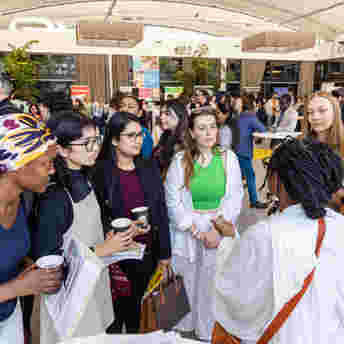
In addition to connecting organizations with internationals in our community, we hold workshops, networking events, and webinars all year round! Sign up for our mailing list so you can be the first to know when we have an event, and so we can keep you informed of local news and events of interest to the international community. (Don't worry - our emails are infrequent and we will never spam you!)

SUBSCRIBE
Join our events

Join our events

In addition to networking events that bring together internationals and local service organizations, we hold workshops and webinars several times a year led by expert guest speakers speaking on a variety of topics. Some past topics include the Dutch labor market, job search strategies, language learning, professional goal setting, and mental health and wellbeing. Check out our events page for information about upcoming events, as well as summaries of our past events. 

DISCOVER OUR EVENTS

From our Facebook page

Powered by Curator.io

Keep informed about upcoming events. Subscribe to our newsletter.

In addition to connecting organizations with internationals in our community, we hold workshops, networking events, and webinars all year round! Sign up for our mailing list so you can be the first to know when we have an event, and so we can keep you informed of local news and events of interest to the international community. (Don't worry - our emails are infrequent and we will never spam you!)

* indicates required